
Teddington High Street Is Evolving as Residents Reshape How They Shop
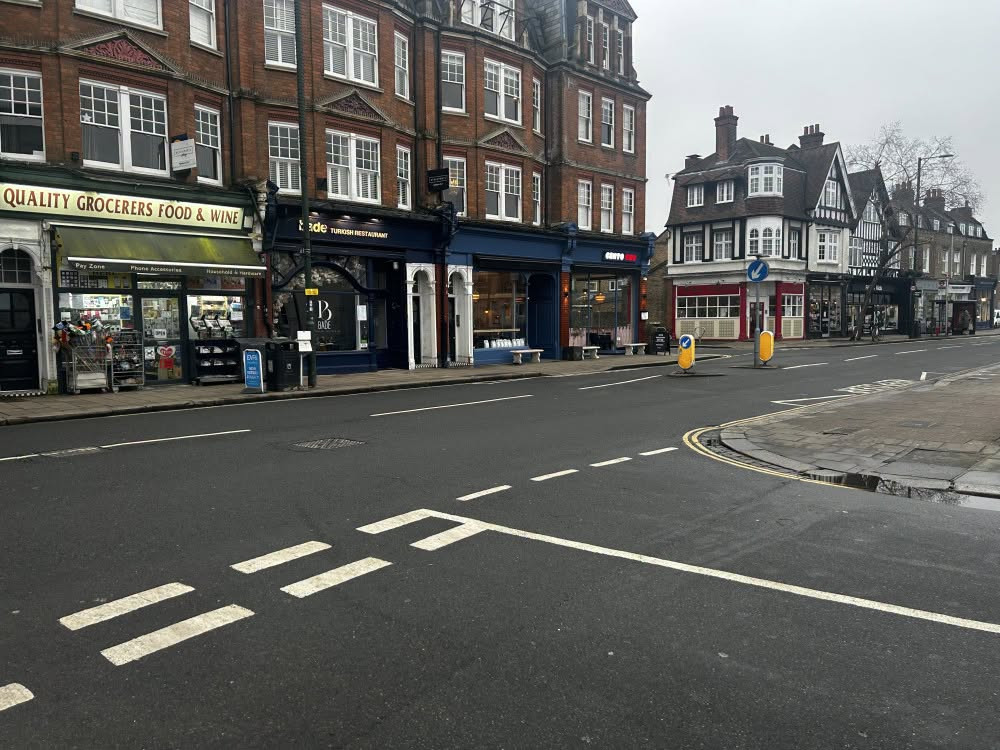
On an ordinary midweek morning in Teddington, the High Street still follows a familiar rhythm. Commuters make their way towards the station, cafés prepare for the morning trade and local shops open their doors for another day. At weekends, residents spend more time around the town centre, local markets and the river.
The scene is familiar, but the way people use the High Street is changing. Online shopping, commuting patterns and the ease of comparing prices from a phone have become part of everyday life. At the same time, local shops, markets and cafés remain an important part of what gives Teddington its character.
A High Street That Keeps Changing
Changes on and around the High Street show how quickly the local retail mix can move. Shops close, new businesses take their place and traders test whether there is enough local demand for something different. Ted's Market is another example of how the town centre continues to find ways of bringing residents together.
These changes do not necessarily mean people have stopped shopping locally. Instead, the distinction between local and online shopping has become less clear.
A resident might pick up bread or coffee locally in the morning, order household essentials online later and return to the High Street at the weekend for something they would rather see in person. Shopping is increasingly divided according to what makes sense for a particular purchase.
For independent businesses, that means the shopfront remains important, but it is no longer the only place where customers interact with them. Social media, online ordering, click-and-collect and newsletters can all help a local business remain visible between visits.
How the Buying Routine Has Changed
One of the biggest differences is what happens immediately before a purchase. With a phone already in hand, checking another retailer or looking again at the final price takes very little time.
Someone buying a birthday present, booking a family activity or ordering something for the house can compare options without making a separate shopping trip. Often it is simply a final check rather than an extended search for the lowest possible price.
Before completing an online order, a shopper might see whether a discount code is available, check the delivery charge and then decide whether the purchase still makes sense. It is a small addition to the buying process, but one that digital shopping has made much easier.
The habit fits naturally into a place like Teddington, where local shopping and online convenience do not have to be opposites. Residents can value having independent businesses nearby while still shopping online when price, availability or delivery makes it more practical.
Why the High Street Still Matters
What online shopping cannot easily reproduce is the reason people walk through Teddington town centre when they are not necessarily looking for anything in particular.
The High Street sits within a wider local routine that includes cafés, the station, residential streets and the river. A trip to buy one thing can become coffee, lunch or another stop along the way. At weekends, walkers and cyclists around the Thames add another layer of activity that has little to do with a conventional shopping trip.
That gives independent businesses something online retailers cannot offer: proximity and personal service.
For some purchases, being able to see an item, ask a question or speak to somebody who knows the product remains useful. A good local shop can become part of a resident's routine in a way that is difficult to measure purely through price.
This is particularly important for businesses that cannot compete with large online retailers on scale. Their advantage is more likely to come from service, knowledge, convenience and the relationship they build with customers.
Online and Local Are Not Always Competitors
The relationship between online and local shopping is also more complicated than the familiar idea that one is replacing the other.
Someone may discover a product while browsing locally and buy it later. Another shopper may research online before deciding that seeing the item in person is worth a trip into town. Others divide their spending, buying everyday necessities online while keeping food, gifts or more personal purchases local.
Price comparison can sit within that routine without determining where every purchase is made. Someone who already knows what they want may check Valuecom before completing an online order later in the week, while still choosing a Teddington business when service, convenience or the ability to see the product matters more.
For local traders, the challenge is therefore not simply persuading residents to stop shopping online. It is giving them a reason to include the High Street in a routine that now moves easily between physical and digital spaces.
A Town Finding Its Own Balance
Teddington's retail landscape will continue to change. Some businesses will leave, others will arrive, and markets and community events will create different reasons for people to spend time in the town centre.
What remains important is that the High Street is more than a collection of transactions. Residents pass through it on their way to the station, meet friends there, stop for food and combine shopping with other parts of daily life.
That helps explain why online shopping has not made the local High Street irrelevant. The two increasingly exist alongside each other, serving different needs at different moments.
The rhythm of Teddington High Street is changing, but it has not disappeared. Residents are simply combining old and new habits: browsing locally, comparing digitally and continuing to use the town centre as somewhere to shop, meet and spend time.
New teddington Jobs Section Launched!!
Vacancies updated hourly!!
Click here: teddington jobs
Share: